
Halfway through my transitional deaconate
A little reflection on what I'm learning about service and proclamation
God willing and people consenting, my ordination to the priesthood is in August of this year, which means I’m roughly halfway through my curacy as a deacon. It’s been fascinating to notice the internal and external changes to my sense of self and vocation since becoming ordained in the Episcopal Church. I’m in an interesting position, having been ordained once before. My discernment toward the priesthood was not so much a question of whether I was called to ordination, but why I’m called to ordination in this tradition. To be honest, I expected my first ordination to feel quiet, and I anticipated my time as a transitional deacon to be meaningful as a step along the way. But the joy and even relief of my ordination to the deaconate was far more than I realized it would be, and this time has been meaningful in its own right and not only because it is a part of the process toward becoming a priest.
When I sent my first selfie in my collar to a friend, I expressed my joy at having something to wear on the outside that reflected what I have felt so deeply, for most of my life, on the inside. They said, “Clerical euphoria!” And that felt exactly right.

I wear it to work every day. I’m the chaplain for a senior living community, and it’s been a joy to have people respond in a way that matches my own sense of vocation. The residents share in my joy as people who’ve been a part of my time in discernment and education. The collar has also been a wonderful way for people experiencing memory loss to remember who I am, lessening any sense of embarrassment when they know they’ve forgotten my name. In Memory Care, there is a gentleman who introduced himself to me every time I visited in the first few weeks he lived there. Then, one day, he saw me approaching and asked with a smile, “Are you meeting your deacon quota today?” I really believe the collar, a garment he likely recognizes from years of being a member of the laity, helped him remember who I am to him and who he is to God. Euphoria.
In addition to my work as a chaplain, I’m a curate (a church word for internship or placement to help new clergy learn before taking on a full leadership role) with a nearby Episcopal congregation. Sadly, I haven’t had the time to offer I hoped I would. Working full time, including Sundays, and finishing my Anglican studies has prevented me from being fully available to them. They have still greeted me with hospitality, excitement, and generosity. A few times a month I serve as what one parishioner calls “The eight o’clock deacon” in their Rite I service. Alongside their other deacons, I assist in all the roles assigned to deacons in the prayer book: bidding the confession, reading the Gospel, saying the prayers, setting the table, and offering the dismissal. I’ve helped serve coffee at the farmer’s market, and have attended a few staff meetings. I was given the sacred privilege of chanting the exsultet for the Easter vigil, and over the summer will assist with funerals and weddings, and attend vestry and committee meetings to continue learning how an Episcopal church operates. I hope to spend more time at the farmer’s market and assist with their outreach ministries (which is a particularly salient role for deacons).
A few months ago in my final residential weekend for my Anglican studies, I was particularly struck by the ministry of one of the deacons appointed to the school. She has a quiet countenance and never draws attention to herself. She is our innkeeper who oversees our lodging and meals, working before we arrive in the mornings to set out breakfast and seen between class sessions in the kitchen washing dishes and resetting the space for the next meal. Then, in the evening, she dons an alb and deacon’s stole to proclaim the Gospel to and sets the altar for us to receive another kind of nourishment. This time spent as a deacon helped me reflect more deeply on her work and at the profundity of her ministry as person who humbly scrapes the remnants of our dinner off our used plates before boldly proclaiming the Good News.
I’m realizing the intentionality of the juxtaposition of these tasks. Inherent to the vocation of ministry for all orders is our service to and on behalf of others, and deacons particularly embody that call, inviting us all to see that our work on behalf of others is itself a proclamation of the Good News. Our setting the table offers hospitality that beckons people to come and receive nourishment before being dismissed to take that nourishment into the world.
The Rev. Dr. Sam Wells, vicar of St. Martin-in-the-Fields in London, teaches about how the Christian faith is rooted in relationship to others. This is expressed most notably at St. Martin-in-the-Fields with their ministry for and with people who are unhoused. They have a charity that addresses homelessness at a systemic level, but Wells emphasizes the heart of their call to serve the homeless is to be with them. Jesus’s incarnation revealed a God who desired to be with us. For thirty years before he worked for us and alongside us, Jesus walked with the people of his community in every day life seeing them not as a problem to be fixed but people worthy of love and belonging.1
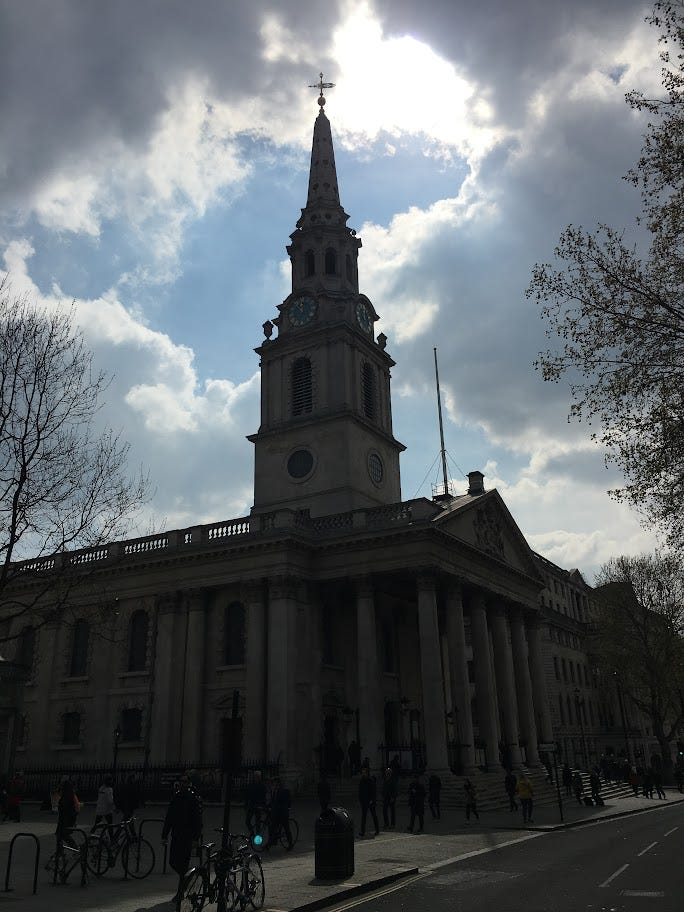
That to me feels something like what it means to be a deacon. Deacons inherently remind us of the incarnational Christ, draw our attention to the relationships we share with one another, and show us how service itself is a proclamation of God’s word made known in the world.
I’m grateful for the chance to be a deacon, if only for a little while. I’m glad, also, to realize this first portion of my ordination is not simply a holding period; I hope inhabiting this role of service and proclamation informs my priesthood long after this transitional period ends.
I cannot commend this video to you enough!